PRESBYOND
A LASIK-based treatment that sets one eye mainly for distance and the other slightly for near. Your brain blends the two into one range of clear vision.

A LASIK-based treatment that sets one eye mainly for distance and the other slightly for near. Your brain blends the two into one range of clear vision.

A few hours at the clinic. The laser itself takes moments.
At screening, trial lenses show whether blended vision suits you.
As in LASIK, a thin flap is made and lifted.
The laser sets one eye for distance and the other slightly for near.
Over the following weeks, your brain learns to combine them.
Most daily tasks can usually resume the next day. Getting used to near and distance vision takes weeks, sometimes months. Typical, not promised; healing differs from person to person.
Watery, scratchy eyes for a few hours, as after LASIK.
Distance returns quickly; near improves as your brain adapts.
Vision settles, and check-ups see how the two eyes work together.
Your surgeon will go through these with you before you decide.
Some blur or reduced depth perception while the brain adapts.
Dry eyes, and glare or halos at night, as with LASIK.
Needing glasses for some tasks, or a further adjustment.
Both are uncommon.
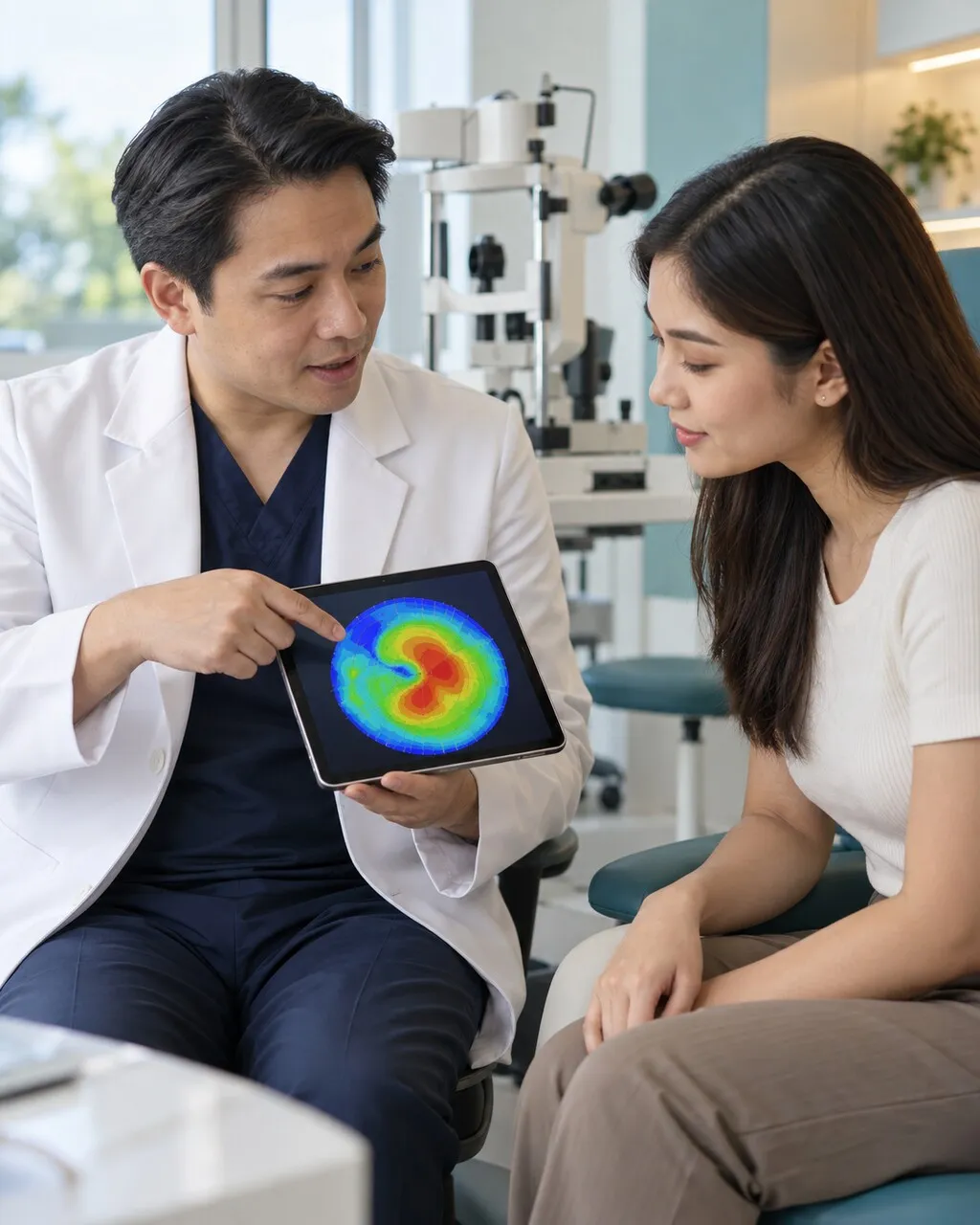
The normal ageing of the lens. From your forties you hold your phone further away and need more light to read.
Related, but each eye also gets a wider depth of focus, which makes the blend easier for most people.
Then lens surgery at Galileo may be a better route, because a new lens can address both. Your surgeon will tell you at screening.
No one can promise that. The aim is to need them much less, and many people manage most daily tasks without them.
A screening measures your eyes and ends with a plain answer.
Or call or Viber reception on 0916 670 5176 or 0917 884 7466. Tuesday to Saturday, 6 am to 4 pm.
May we use Google Analytics to count page visits and consultation link clicks? We do not send your form details. You can change your choice in Analytics settings. Read our privacy notice.