Retina
Laser for diabetic eye disease, surgery for retinal detachment, and vitrectomy.

What each treatment is for, how it is done and how you recover.

A cataract clouds the lens inside your eye. Surgery removes the clouded lens and replaces it with a clear implant.
Learn when surgery may help, what happens on the day, and which risks and recovery questions to discuss with your surgeon.
Cataract surgery and recoveryYour lens choice affects how you see at different distances and how much you may need glasses.
Compare monofocal, toric and multifocal or extended depth of focus lenses, and learn why eye measurements matter.
Lens choices and limitationsGlaucoma damages the optic nerve. Treatment lowers eye pressure to protect the sight that remains.
Learn about glaucoma types, the tests used to find it, and treatment with drops, laser or surgery.
Glaucoma assessment and treatment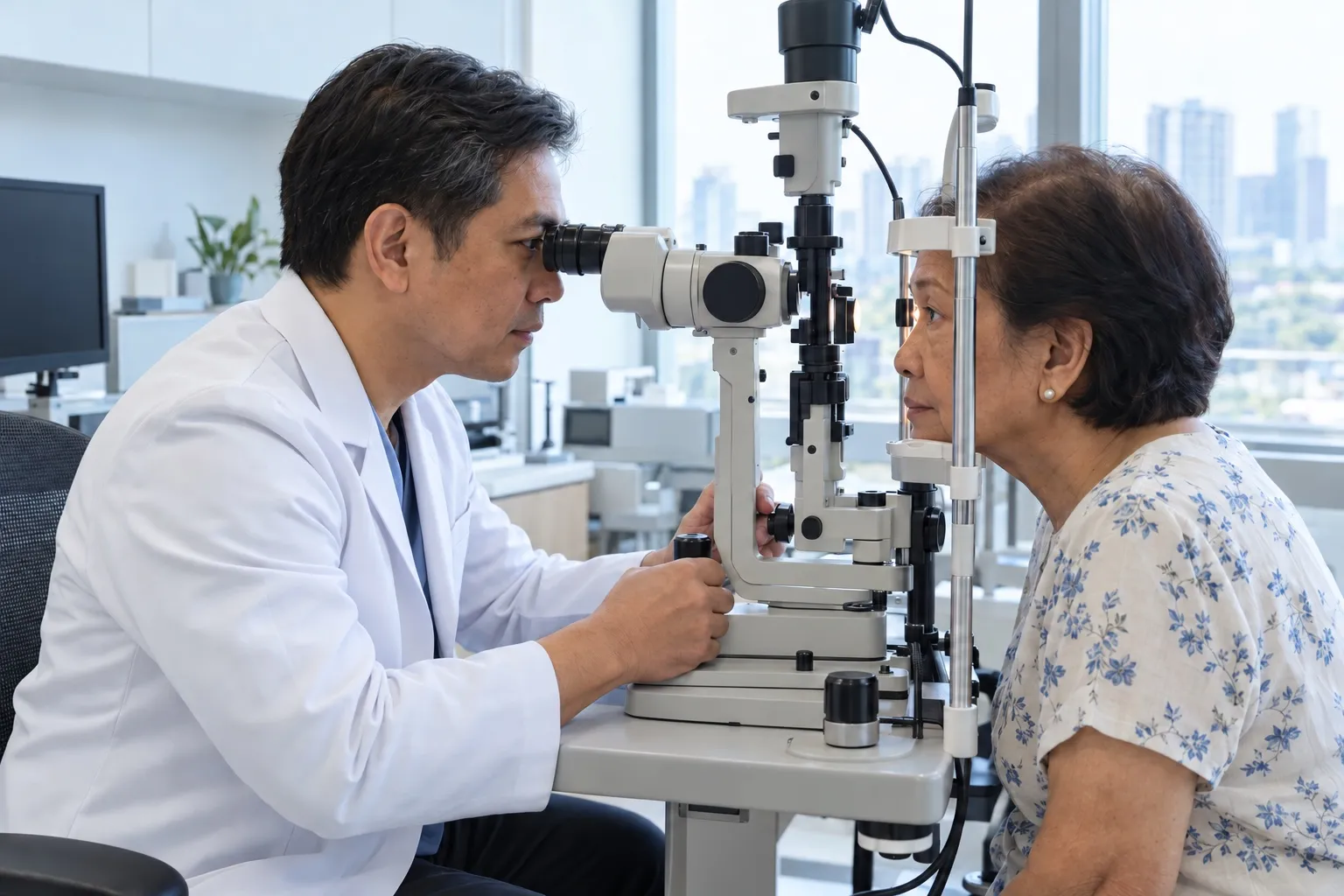
Years after cataract surgery, the capsule behind the new lens can turn hazy. A laser clears it in minutes, with no cut into the eye.
Surgery and laser for other eye diseases. This list is being confirmed.
Laser for diabetic eye disease, surgery for retinal detachment, and vitrectomy.
Repair of drooping lids, eyelid defects and tearing problems.
Vision checks for children, and surgery for crossed or lazy eyes.
An examination and a plain talk. Bring your glasses and a list of your medicines.
Or call or Viber reception on 0916 670 5176 or 0917 884 7466. Tuesday to Saturday, 6 am to 4 pm.
May we use Google Analytics to count page visits and consultation link clicks? We do not send your form details. You can change your choice in Analytics settings. Read our privacy notice.