Open-angle glaucoma
The drainage channel works poorly and pressure rises slowly, with no pain. Side vision fades first, so regular eye exams are how it is found.

Tests and treatment aim to protect the sight that remains. Regular follow-up matters.
Glaucoma slowly damages the optic nerve, usually through raised eye pressure. Lost sight does not come back, so treatment lowers the pressure to protect what you have.
The drainage channel works poorly and pressure rises slowly, with no pain. Side vision fades first, so regular eye exams are how it is found.
The iris blocks the drainage channel, slowly or as a sudden attack with severe pain, redness, blur and halos.
A sudden painful red eye with blurred vision is an emergency. Seek care the same day.
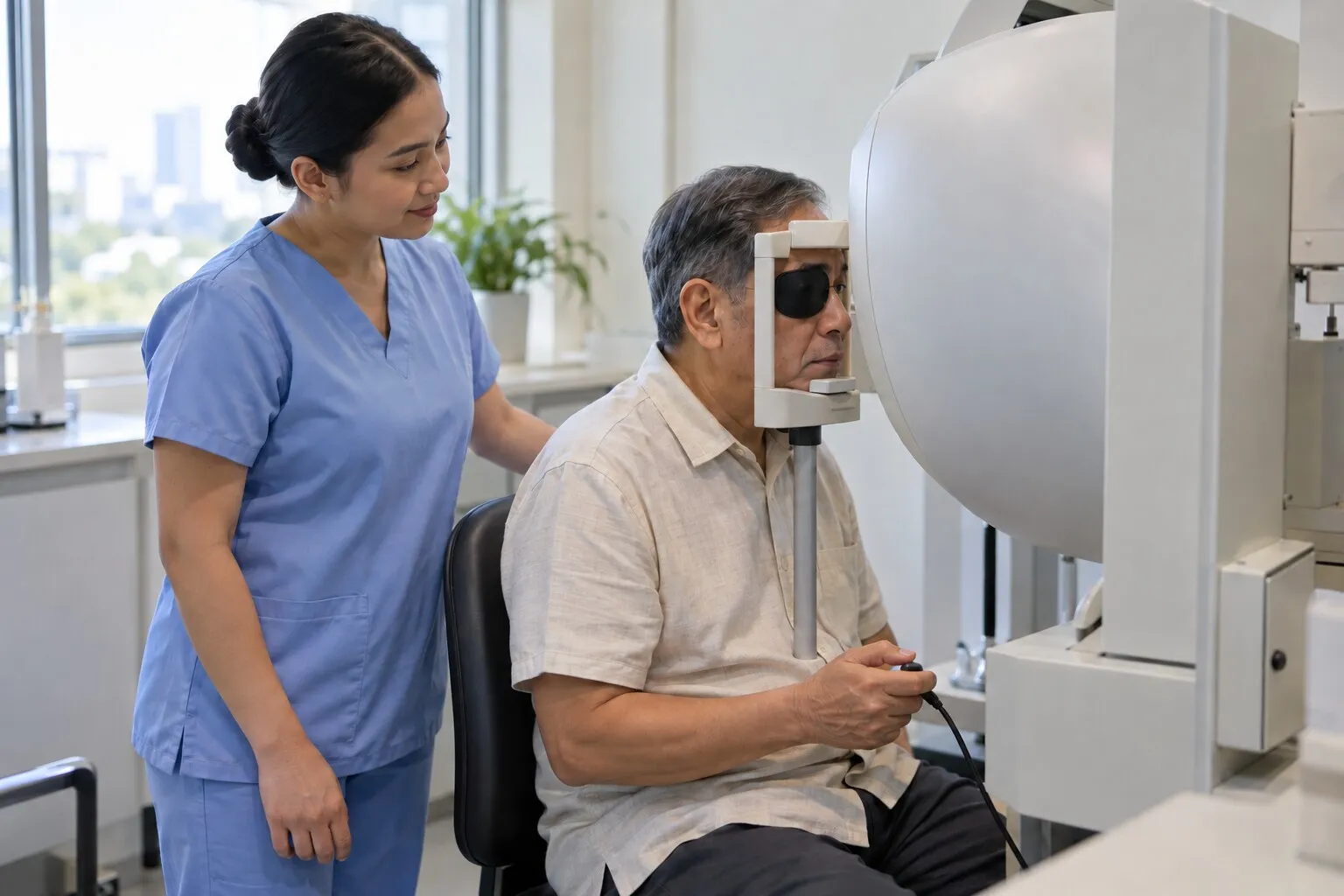
Treatment lowers eye pressure. It does not reverse damage already done. Your clinician discusses the options after examining your eyes.
Glaucoma is lifelong, so field tests and nerve scans are repeated and compared over the years.
Your surgeon can explain which treatments may suit your eyes. This information does not replace an individual assessment.
Or call or Viber reception on 0916 670 5176 or 0917 884 7466. Tuesday to Saturday, 6 am to 4 pm.
May we use Google Analytics to count page visits and consultation link clicks? We do not send your form details. You can change your choice in Analytics settings. Read our privacy notice.