Galileo SurgiCenter
Book a consultation

See life clearly, spectacle-free.

Advanced laser vision correction.

Laser procedures that can reduce your need for glasses or contacts, if a screening shows your eyes are suited.

Value for Vision: Safer, Better, Faster

Why the world blurs

Your eye focuses light onto the retina. When its shape is slightly off, the focus misses. Laser correction reshapes the cornea to fix it.

RetinaCorneaCorneaIrisLensRetinaFocus
The bright spot shows how light reaches the retina. A small, focused spot gives a clear image. A wider spot makes it blur.

Nearsightedness

Near things are clear, far things blur.

The eye is slightly too long, so light focuses in front of the retina.

May be treated with SMILE Pro, LASIK or PRK

Farsightedness

Near things blur first; far things can take effort too.

The eye is slightly too short, so light focuses behind the retina.

May be treated with LASIK or PRK

Astigmatism

Blur or ghosting at every distance.

An unevenly curved cornea focuses light at two points.

May be treated with SMILE Pro, LASIK or PRK

Presbyopia

Reading gets harder after about 40.

The lens stiffens with age and can no longer focus up close.

May be treated with PRESBYOND

The procedures side by side

SMILE ProView procedureFlapless laser vision correction through a small opening.LASIKView procedureFast recovery and a broad range of correction.PRKView procedureSurface treatment, no flap.PRESBYONDView procedureLaser blended vision for presbyopia.
What it treatsNearsightedness and astigmatism, within approved rangesNearsightedness, farsightedness and astigmatism, within approved rangesNearsightedness, farsightedness and astigmatism, within approved rangesPresbyopia, with or without nearsightedness, farsightedness or astigmatism
How it is doneA small opening, without a corneal flapA thin layer of the cornea is lifted, then put backThe surface is treated without a corneal flapA thin layer of the cornea is lifted, then put back, as in LASIK
LaserZEISS VISUMAX 800 femtosecond laserZEISS VISUMAX 800 for the flap, ZEISS MEL 90 to reshapeZEISS MEL 90 excimer laserZEISS VISUMAX 800 for the flap, ZEISS MEL 90 with PRESBYOND software to reshape
What to expect after treatmentMost daily tasks can usually resume in one to two daysMost daily tasks can usually resume the next dayDiscomfort and blurred vision usually last three to five days; vision improves over the following weeksMost daily tasks can usually resume the next day. Getting used to near and distance vision takes weeks, sometimes months
Often considered whenYou want a flapless option, or you play contact sportsYou want the quickest visual recovery, or need farsightedness treatedYour cornea is thin, or has a surface condition not suited to a flapYou are over about 40 and want to depend less on reading glasses
Main limitationNot every prescription can be treated; farsightedness options are more limitedThe flap needs care while it heals: no eye rubbing, and a break from contact sportsThe first few days are more uncomfortable, with light sensitivity and wateringYou may still want glasses for very small print, dim light or long reading

SMILE ProView procedure

Flapless laser vision correction through a small opening.

What it treats
Nearsightedness and astigmatism, within approved ranges
How it is done
A small opening, without a corneal flap
Laser
ZEISS VISUMAX 800 femtosecond laser
What to expect after treatment
Most daily tasks can usually resume in one to two days
Often considered when
You want a flapless option, or you play contact sports
Main limitation
Not every prescription can be treated; farsightedness options are more limited
More about SMILE Pro

LASIKView procedure

Fast recovery and a broad range of correction.

What it treats
Nearsightedness, farsightedness and astigmatism, within approved ranges
How it is done
A thin layer of the cornea is lifted, then put back
Laser
ZEISS VISUMAX 800 for the flap, ZEISS MEL 90 to reshape
What to expect after treatment
Most daily tasks can usually resume the next day
Often considered when
You want the quickest visual recovery, or need farsightedness treated
Main limitation
The flap needs care while it heals: no eye rubbing, and a break from contact sports
More about LASIK

PRKView procedure

Surface treatment, no flap.

What it treats
Nearsightedness, farsightedness and astigmatism, within approved ranges
How it is done
The surface is treated without a corneal flap
Laser
ZEISS MEL 90 excimer laser
What to expect after treatment
Discomfort and blurred vision usually last three to five days; vision improves over the following weeks
Often considered when
Your cornea is thin, or has a surface condition not suited to a flap
Main limitation
The first few days are more uncomfortable, with light sensitivity and watering
More about PRK

PRESBYONDView procedure

Laser blended vision for presbyopia.

What it treats
Presbyopia, with or without nearsightedness, farsightedness or astigmatism
How it is done
A thin layer of the cornea is lifted, then put back, as in LASIK
Laser
ZEISS VISUMAX 800 for the flap, ZEISS MEL 90 with PRESBYOND software to reshape
What to expect after treatment
Most daily tasks can usually resume the next day. Getting used to near and distance vision takes weeks, sometimes months
Often considered when
You are over about 40 and want to depend less on reading glasses
Main limitation
You may still want glasses for very small print, dim light or long reading
More about PRESBYOND

A corneal flap is a thin layer lifted during treatment and then put back. This affects early healing and care after surgery. Recovery times vary, and vision can keep changing for weeks or months.

A young woman runs along a tree-lined path by the water, with the city behind her

Life, with less in the way

What people usually hope to leave their glasses behind for:

  • An early run without fogged lenses
  • Swimming and the beach
  • Travel without packing spares
  • Long days on screens
  • Seeing the clock when you wake up

It can reduce your need for glasses, not end it. Most people need reading glasses as their eyes age.

Am I a candidate?

A screening looks at these. Tick any you want to ask about, and we will add them to your request.

The lasers behind it

Two ZEISS lasers, guided by your own measurements.

ZEISS VISUMAX 800Femtosecond laser
Makes the precise cuts inside the cornea for SMILE Pro, and the flap for LASIK and PRESBYOND.
ZEISS MEL 90Excimer laser
Reshapes the cornea in LASIK, PRK and PRESBYOND, tracking your eye as it moves.
All our technology
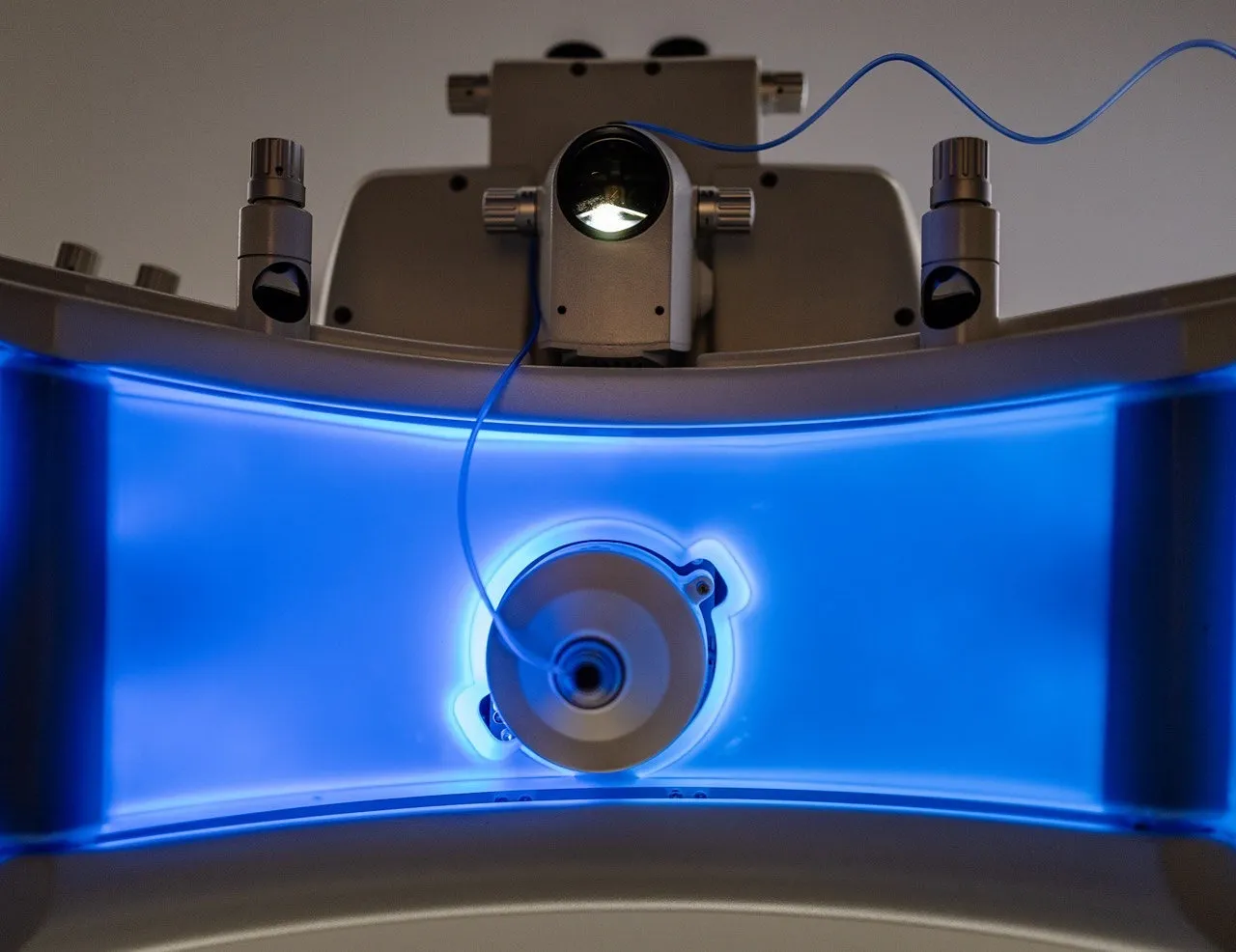
The blue-lit treatment head of the ZEISS VISUMAX 800 laser, with its microscope above

From screening to clear sight

  1. Refractive screening

    Your prescription, cornea and eye health are measured, and a short questionnaire asks how you use your eyes day to day. Contact lens wearers leave them out first.

  2. Your results, explained

    A surgeon tells you whether laser correction suits you, and which procedure.

  3. Treatment day

    Mostly preparation and rest; the laser takes moments. Home the same day.

  4. Follow-up visits

    Check-ups until your vision has settled.

A refractive surgeon shows a young woman a colour map of her cornea on a tablet

Questions people ask us

Am I too old for laser vision correction?

There is no upper age. From your forties the options change, and if a cataract is starting, lens surgery may suit you better.

Does screening commit me to surgery?

No. Screening is an examination and a conversation. Many people take time to decide afterwards.

Do I need to stop wearing contact lenses before screening?

Usually yes, because they change the cornea’s shape for a while. We will tell you for how long.

Is laser vision correction covered by PhilHealth or my HMO?

It is often considered elective, but plans differ. Our team can help you check your coverage.

What if laser correction is not suited to my eyes?

Your surgeon will say so and explain other options, such as lens-based treatments, or staying with glasses or contact lenses.

Which option may suit you?

A screening measures your eyes and ends with a plain answer. Nothing is decided until you are ready.

Or call or Viber reception on 0916 670 5176 or 0917 884 7466. Tuesday to Saturday, 6 am to 4 pm.